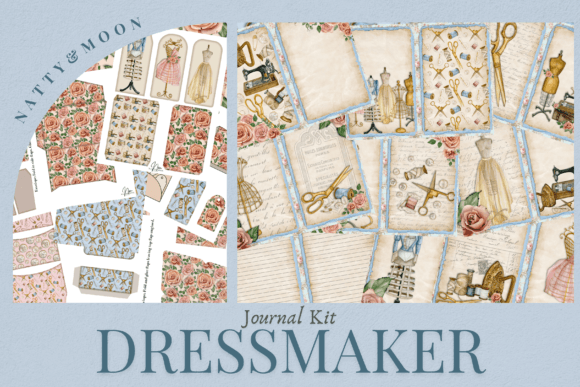
Dressmaker Junk Journal Kit: Vintage Texture & Design Assets
Every graphic designer knows the struggle of making a digital project feel genuinely tactile and lived-in—it’s a challenge that the Dressmaker Junk Journal Kit addresses with remarkable finesse. Crafted meticulously by a master designer, this collection of 20 high-resolution JPEG pages offers a direct gateway to vintage allure and analog depth, solving the common problem of sterile, flat visuals in modern workflows.
Whether you are building a brand identity, curating social media graphics, or exploring creative projects for editorial design, this kit provides a cohesive foundation of ephemera and journal pages that feel authentically plucked from a 1920s atelier. The value lies not just in the quantity of assets, but in their ability to inject visual hierarchy, narrative, and a distinctly human touch into any digital canvas.
Why Authentic Texture Defines Modern Visual Communication
In an era dominated by hyper-polished UI and generic stock vectors, the demand for raw, authentic texture has never been higher. Designers working on branding, packaging design, or digital marketing are constantly seeking elements that introduce depth and a sense of history. The Dressmaker Junk Journal Kit delivers this through carefully curated ephemera that feels plucked from a bygone atelier. The color palette alone—faded pastels, sepia inks, and muted golds—provides a foundational aesthetic that can anchor an entire brand voice or creative project. These are not just decorative elements; they are tools for building a consistent visual language that resonates with audiences seeking authenticity in design trends.
Elevating Branding and Logo Design
Move beyond the sterile perfection of vector-only workflows. Use the ephemera pages from this kit to build client mood boards, create textured backgrounds for logo lockups, or scan elements for packaging design. The tactile quality of vintage dress patterns and ticket stubs adds a layer of storytelling that standard typography alone cannot achieve. For brand identity projects targeting heritage, artisan, or boutique markets, these assets are invaluable for establishing an immediate emotional connection.
Enhancing Digital Marketing and UX Design
Apply the journal pages as subtle backgrounds for web design headers or email campaigns to break up negative space with intention. In UX design, these textures can guide the user’s eye, creating focal points without disrupting functionality. When designing social media graphics, these vintage elements provide instant visual interest, helping brands stand out in crowded feeds. The high-resolution format ensures that whether you are designing for a mobile screen or a large-scale advertising campaign, the integrity of the texture remains intact.
Enriching Editorial and Print Layouts
Whether you are laying out a magazine spread or designing a product catalog, integrating these dressmaker elements—like pattern tickets or handwritten notes—adds compelling depth. They work exceptionally well in creative projects such as art journals, merchandise, and advertising campaigns where narrative is key. The elements serve as excellent starting points for visual hierarchy, allowing you to build layers that guide the reader through the content in an engaging, non-linear way.
Where to deploy these versatile assets:
- Brand identity mood boards and client presentations
- Social media marketing templates and story backgrounds
- Website hero sections and email newsletter headers
- Product packaging and hang tags
- Editorial magazine spreads and book covers
- Digital product mockups and UI splash screens
The Ephemera Pages (10 High-Resolution Files)
These aren’t simple scans; they are composed layers of visual history. Each page is a ready-to-use collage element featuring vintage dress patterns, ticket stubs, postage marks, and botanical illustrations. For a designer working on print design or brand identity, these solve the critical problem of visual consistency. Instead of hunting through multiple sources for a cohesive vintage look, these 10 pages offer a unified aesthetic, saving hours of workflow time and ensuring a professional presentation across all deliverables.
The Journal Pages (10 Distinct Backdrops)
The journal pages provide the structural canvas. They feature subtle grid lines, ledger entries, and faded handwriting that work beautifully for both mixed media projects and digital note-taking applications. The resolution is high enough to scale well, whether used as a full-page background in an editorial layout or a cropped texture overlay in UI design. Their distinct character allows designers to maintain modern aesthetics while injecting an analog soul, making them perfect for adding depth to otherwise flat typography or illustration work.
Integrating Vintage Assets into Your Design Workflow
To get the most out of the Dressmaker Junk Journal Kit, consider these practical steps for seamless integration into your existing design system:
- Check Color Compatibility: Use a color picker to extract the key hues—faded rose, ink blue, and parchment—and build your project’s color palette directly from the kit to ensure harmony.
- Master Blending Modes: In Photoshop or Procreate, use “Multiply” for ephemera layers to let textures interact seamlessly with your base design. “Overlay” works well for adding subtle grain without overpowering foreground elements.
- Maintain Visual Hierarchy: Use the busier ephemera pages as background texture and the cleaner journal pages for foreground text, sketches, or call-to-action elements.
- Scale Respectfully: These are high-resolution JPEGs, but always check DPI for print projects to ensure the vintage texture remains crisp and professional without pixelation.
The intersection of old-world charm and modern design tools is where truly memorable creative projects are born. This kit bridges that gap perfectly, offering designers a curated set of creative assets that enhance storytelling, enrich visual communication, and strengthen brand voice. By thoughtfully integrating these elements into your graphic design toolkit, you move beyond mere decoration and start building authentic visual experiences that resonate deeply with audiences. Whether you are refining a packaging design, building a social media strategy, or simply seeking fresh design inspiration for personal growth, this collection proves that the best design often finds its future in the past.