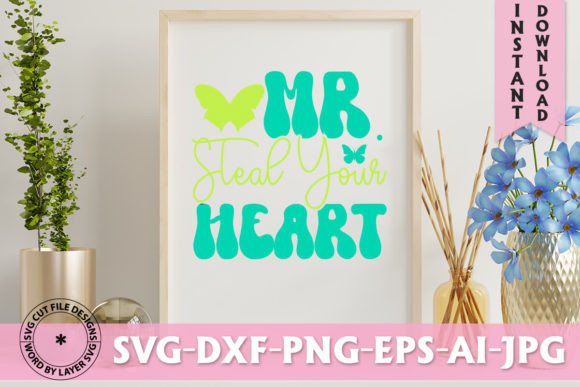
Mr. Steal Your Heart Retro Design: What to Know Before You Download and Create
There is something irresistible about retro design. The bold lines, the nostalgic colour palettes, the way a single graphic can transport you to another era. Mr. Steal Your Heart Retro Design captures that charm perfectly. It is a digital crafting asset that lets you create everything from personalised apparel and home decor to marketing materials and gifts with a distinct vintage feel. But before you hit download, there are a few things worth understanding about this type of product. Many people assume a digital design file works the same way across every project. That assumption can lead to frustration, wasted time, and less than impressive results.
Understanding What You Actually Get
Downloading a digital design is not the same as ordering a printed product. You receive a .zip file containing multiple file formats, each with a specific purpose. The Mr. Steal Your Heart Retro Design download includes an SVG file layered by word for Cricut compatibility, an EPS vector file, a high-resolution PNG with a transparent background at 300 DPI, a DXF file for AutoCAD workflows, an AI file for Adobe Illustrator, and a JPEG preview image.
Each format exists for a reason. Yet one of the most common mistakes people make is using the first file they open without considering their software or machine requirements. A PNG is perfect for digital mockups and web use, while an SVG or DXF is necessary for cutting machines like Cricut and Silhouette. Using the wrong format can lead to poor cuts, missing layers, or distorted images. Always check which file your tool supports before unzipping and importing.
Ignoring Layer Structure in SVG Files
The SVG file in this set is designed word by layer. That means each word in the design sits on its own layer within the SVG. This is incredibly useful for multi-colour projects, resizing, or rearranging elements. However, many beginners open the file and treat it as a single flat graphic. They try to cut all layers at once, which defeats the purpose of having separate colour layers.
Take a moment to open the SVG in Cricut Design Space or Silhouette Studio and explore the layers panel. You can assign each word a different colour, adjust sizing individually, or hide elements you do not want to use. This approach gives you far more control over the final product. A layered SVG is not just a design; it is a toolkit for customisation.
Overlooking the Transparency Advantage of PNG Files
The PNG file comes with a transparent background at 300 DPI. That is a professional-grade resolution suitable for printing, social media graphics, and web use. Yet many people make the mistake of using a JPEG for everything simply because it is more familiar. The JPEG included in this set is a preview image, not a production file. If you try to place a JPEG over a coloured background, you will see a white box around the design. That does not happen with the PNG.
Use the PNG for any project where the design sits on top of another colour or image. Mockups, t-shirt designs, flyers, and digital presentations all benefit from that transparent background. It saves you the hassle of manually removing backgrounds later, and it maintains the crisp, clean edges of the retro artwork.
Confusion Between Vector and Raster Formats
Another oversight that causes problems is not understanding the difference between vector and raster files. The SVG, EPS, DXF, and AI files are vector formats. They can be scaled to any size without losing quality. The PNG and JPEG are raster formats, meaning they are made of pixels and have a fixed resolution.
If you plan to print a large banner or sign using Mr. Steal Your Heart Retro Design, always use the vector file. Scaling up a raster image beyond its intended size results in blurry, pixelated output. Vector files remain sharp at any dimension. This is especially important for entrepreneurs and small business owners who want professional-looking signage or merchandise. Using the correct format from the start avoids costly reprints and disappointment.
Assuming Compatibility Without Checking Software
This design is compatible with Cricut, Silhouette, Inkscape, Adobe Photoshop, and Adobe Illustrator. That covers a wide range of tools, but it does not mean every file works in every program. For instance, Inkscape handles SVG and EPS well but may not open AI files reliably. Adobe Illustrator opens AI and EPS natively but may treat DXF files differently.
Before you download, think about which software you actually use. If you are a Cricut user, the SVG file is your best bet. If you work in Adobe Illustrator, the AI file will give you full editability. If you prefer open-source tools, stick with SVG or EPS. Knowing your workflow saves you from opening a file only to find it does not behave as expected. The good news is that with five different formats included, there is almost always a workable option regardless of your setup.
Forgetting to Unzip Properly
It sounds basic, but many people struggle with the .zip file. You cannot use the files while they are still inside the zipped folder. Your cutting machine software or design program will not recognise them. Extract the files to a folder on your computer first. On a Mac, double-clicking usually does the job. On Windows, right-click and select Extract All. Once the files are unzipped, you can import them into your software of choice.
This small step is often overlooked by first-time digital download users. They try to drag the zip directly into Design Space or Silhouette Studio and get an error message. A quick unzip solves the problem entirely. Organise your extracted files into a dedicated folder so you can easily find them later.
Not Backing Up Your Downloads
Digital downloads are typically available for a limited time after purchase. Some platforms allow re-downloads, but many do not. Losing your files because of a computer crash or accidental deletion is frustrating, especially if you loved the design and wanted to use it again for a new project.
After you download Mr. Steal Your Heart Retro Design, make a backup copy. Save it to an external drive, a cloud storage service, or at least a second folder on your computer. That way, even if something happens to your original download, you still have access to all six file formats. This is a simple habit that protects your investment and keeps your creative options open.
Using the Wrong DPI Setting for Print Projects
The PNG file is set at 300 DPI, which is the standard for high-quality printing. However, some design software defaults to 72 DPI for web use. If you import the PNG and your software resamples it to a lower resolution, the printed result may look soft or grainy. Always check your document settings before placing the image. Make sure the project is set to 300 DPI and that you are not scaling the image beyond its original dimensions.
For vector files, DPI is less of a concern because they are resolution-independent. But if you export a final design from a vector editor as a raster image, choose 300 DPI in the export settings. This ensures your printed materials retain the sharp, professional look that retro designs deserve.
Underestimating the Value of the Preview JPEG
The JPEG preview image may seem like an afterthought, but it serves an important purpose. It gives you a quick visual reference of the completed design. When you are working with layered files, it is easy to lose track of how the final design should look. The preview helps you confirm that all layers are aligned and correctly coloured before you cut or print.
Use the JPEG as a reference image while you assemble your project. Compare your layered arrangement in the software to the preview. If something looks off, you can catch it early rather than wasting materials on a misaligned cut. This is especially helpful for beginners who are still getting comfortable with layered SVG files.
Choosing the Right Design for Your Audience
Mr. Steal Your Heart Retro Design has a specific aesthetic. It appeals to people who appreciate vintage charm, playful typography, and romantic or whimsical themes. If you are creating products for a younger audience or a minimalist brand, this design may not fit. That is not a flaw in the design itself. It is a matter of matching the asset to the message you want to communicate.
Take time to evaluate your project before downloading. Ask yourself whether the retro style aligns with your brand identity, your customer expectations, or the occasion you are designing for. Using a design that does not match your audience can dilute your message and reduce the impact of your work. When the style fits, the design feels intentional and professional. When it does not, even a beautiful graphic can look out of place.
Getting the Most from Your Digital Purchase
Digital design files offer tremendous flexibility. You can resize them, recolour them, combine them with other elements, and use them across multiple projects. The Mr. Steal Your Heart Retro Design is no exception. With the right approach, this single download can produce t-shirts, mugs, posters, cards, social media graphics, and more.
To truly maximise your investment, experiment with the layered SVG. Try separating words onto different coloured materials for a multi-colour iron-on project. Use the EPS or AI file to adjust typography or add embellishments. Combine the PNG with other retro graphics in a digital collage. The more comfortable you become with each file format, the more creative possibilities open up.
Avoid the temptation to use only one format for everything. Each file type in this download serves a distinct purpose. Learning when and how to use each one will elevate your crafting and design work. It may take a few extra minutes to learn the differences, but that knowledge pays off every time you start a new project.
Final Thoughts Before You Create
Mr. Steal Your Heart Retro Design is a versatile and charming asset for anyone who loves vintage-inspired crafting, whether you are a seasoned professional or a curious beginner. The key to getting great results lies in understanding what you have downloaded and using each file the way it was intended. Check your software compatibility, use vector files for large-scale projects, rely on the PNG for transparent backgrounds, and always back up your purchase.
When you approach a digital download with a little knowledge and preparation, the creative process becomes smoother, more enjoyable, and far more rewarding. Take the time to explore the files, test them in your preferred software, and experiment with different applications. That is where the real value of a design like this reveals itself: not just in the artwork itself, but in what you can make with it.