Sublimation Watercolor Snakes PNG: What You Need to Know Before You Buy or Use These Files
If you have been browsing design resources for sublimation projects, you have likely come across watercolor snake designs. The snake is a powerful symbol in many traditions, including the Eastern calendar, where it represents wisdom, cunning, elegance, and determination. A watercolor rendering of a snake can bring those qualities into a project with a soft, artistic feel. But working with Sublimation Watercolor Snakes PNG files is not as simple as downloading and printing. Several common misunderstandings can lead to wasted time, poor print results, and frustration. Let us look at what you actually need to know to get the most out of these files.
Understanding What You Are Actually Getting
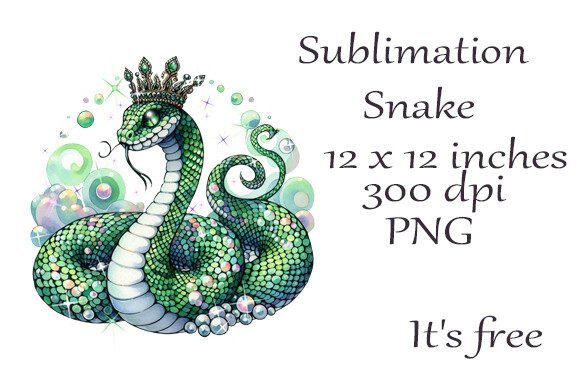
The product description often lists impressive numbers: 12 x 12 inches, 3600 x 3600 pixels, 300 DPI, transparent background. These are all good things, but they only matter if you understand what they mean for your specific project. Many people see Sublimation Watercolor Snakes PNG and assume it works exactly like every other graphic file they have used. That assumption is where problems begin.
A PNG file with a transparent background is excellent for layering over other designs, placing on colored backgrounds, or combining with text. But it is not a cutting file. This is one of the most frequently overlooked details. If you are expecting to use a cutting machine to slice around every edge of the watercolor snake, a PNG will not do that. The file is a raster image, not a vector. You cannot convert it to SVG and expect it to behave like a true vector cut path. That misunderstanding alone has caused many crafters to buy files they could not use the way they intended.
Before you purchase, ask yourself: do you need a layered design for printing on mugs and shirts, or do you need a cut path for vinyl? If you need the latter, look for a vector format. If you want the soft, blended edges of watercolor for sublimation, the PNG is actually the better choice. The watercolor effect relies on the pixel-based transparency that PNG supports well.
The Mistake of Ignoring the Unzip Requirement
One detail that gets glossed over repeatedly is that Sublimation Watercolor Snakes PNG files come in a ZIP folder. You need to unzip them before you can open them in any design program. This sounds trivial, but it trips up beginners constantly. They try to open the ZIP directly in their design software, get an error, and assume the file is corrupted.
You will need a computer to unpack the folder, not a phone or tablet unless you have a file manager that handles ZIP archives. Once unzipped, you will have a PNG file ready to use. But if you are working on a mobile device and do not have unzip capability, you will be stuck. Always check your workflow before you buy. Know what device you will be using and whether it can handle a compressed folder.
A better approach is to download the ZIP to a computer, unzip it, and then transfer the PNG to whatever device you design on. Keep the original ZIP as a backup in case you need to redownload later.
Resolution Confusion and Print Quality
The specifications say 3600 x 3600 pixels at 300 DPI. That is a high-resolution file, and it will print beautifully at full size. But if you scale it up beyond 12 x 12 inches, you will lose quality. Watercolor designs rely on soft transitions and subtle texture. Stretching them too large makes those transitions look blocky or pixelated.
Many people assume that because the file is high resolution, they can blow it up to any size. That is not true. If you want to print a sublimation watercolor snake on a large item like a blanket or a tote bag, you need to keep it within the original dimensions or scale it down. Scaling up beyond 12 inches will degrade the watercolor effect. The soft washes of color that make watercolor appealing become jagged and harsh.
If you need a larger design, your best option is to use the PNG as a base and recreate the watercolor effect at a larger scale using brushes or filters in your design program. Do not rely solely on scaling the file itself.
Overlooking the Transparent Background Pitfalls
Transparent background is a huge advantage when you want to place the snake over another pattern or color. But it also means there is no white backing. If you are sublimating onto a dark fabric, the transparent areas will show the color of the fabric, which may not be what you want. Sublimation works best on white or light-colored substrates because the ink is translucent. The watercolor effect will appear muted or invisible on dark materials unless you use a white base layer.
Beginners often think that transparent means invisible on any surface. That is not how sublimation works. The ink bonds with the fabric or coating, and the transparency in the PNG tells your software to leave those areas unprinted. On a dark shirt, those unprinted areas stay dark, and the watercolor colors may look muddy or disappear entirely. Plan your substrate carefully. If you are designing for a dark item, consider adding a white underlay or choosing a different file format that includes a white layer.
Software Compatibility and File Format Limits
Sublimation Watercolor Snakes PNG files require a design editing program that supports PNG and JPG formats. Most programs do, but some older or very basic software may not handle transparency well. If your program does not recognize the transparent areas, you will see a white box around the snake instead of the soft watercolor edges.
Test your software before you buy a bundle of designs. Open a free PNG with transparency from another source and see how it behaves. If the transparent areas show as white or checkerboard, your software is fine because that is how transparency is displayed on screen. But if it shows as a solid white box when you place it on a colored background, your program may not support alpha channels. In that case, you will need to upgrade your software or use a different file format.
Another overlooked issue is color profile. Watercolor designs often rely on subtle color blending. If your software uses a different color profile than the one intended for the file, the colors may shift. You might see a vibrant green in the preview but get a muddy olive in the print. Always check your color settings and do a test print on a small item before committing to a large batch.
Creative Applications and Realistic Expectations
The list of possible uses for Sublimation Watercolor Snakes PNG is long: logos, postcards, frames, albums, business cards, notebooks, wedding invitations, sublimation products, T-shirts, pillows, bags, mug stickers, and more. That is all realistic, but only if you understand the limitations of each medium.
For example, using a watercolor snake on a business card may look artistic, but the fine details of the watercolor effect can get lost at small sizes. A business card is only 2 x 3.5 inches. The 12-inch design will need to be scaled down significantly. At that size, some of the subtle color variation may disappear, and the snake might look like a solid shape rather than a watercolor piece. If you want that detail to show, consider using only a portion of the design as a focal point rather than the whole image.
For mugs and tumblers, the cylindrical surface can distort the image if you do not wrap it correctly. Watercolor designs with soft edges actually work well on curved surfaces because the lack of hard lines makes distortion less noticeable. That is a strength of the watercolor style. Use it to your advantage.
For pillows and T-shirts, think about placement. The snake design is square at 12 x 12 inches. That size works well on the front of a shirt or the center of a pillow. But if you try to place it near a seam or edge, the square format may not fit well. You can crop the image, but cropping a watercolor design can cut off the soft edges in an unnatural way. Plan your placement before you resize or crop.
The Risk of Using Low-Quality Source Files
Not all Sublimation Watercolor Snakes PNG files are created equal. You may find similar designs at very different price points. Some files have been resampled from lower resolutions, which destroys the watercolor texture. Others have jagged edges from poor masking. A true watercolor design should have smooth, organic edges that blend naturally into transparency. If you see hard outlines or visible pixelation around the edges, the file was not prepared correctly.
When evaluating a file, look for previews that show the design on a dark background. That reveals how well the transparency is handled. If the edges look fuzzy or have a halo, move on. A clean watercolor PNG should blend seamlessly into any background without a visible border.
Also check the resolution claims. A file that says 300 DPI but is only 1200 pixels wide is not truly 300 DPI at 12 inches. Do the math: 12 inches at 300 DPI equals 3600 pixels. If the pixel dimensions are lower, the DPI claim is misleading. Stick with files that match the 3600 x 3600 pixel standard for that size.
Practical Advice for Better Results
Start with a clear plan. Decide what you are making, what substrate you are using, and what size the design needs to be. Then choose your file accordingly. If you are making small items, you do not need a 12-inch design. A smaller file will work fine and may be easier to handle. But if you want flexibility, the larger file gives you room to scale down without losing quality.
Always unzip the folder on a computer and keep the original PNG untouched. Work on a copy so you always have the original to fall back on. When you place the design in your software, check the transparency against a colored background before you finalize the layout. If the edges look harsh, adjust the blending mode or add a soft shadow to help the watercolor feel integrate.
Print a test on plain paper before you waste sublimation paper and ink. This gives you a chance to see if the colors match your expectations and if the size is appropriate. Adjust and test again until you are satisfied. That extra step saves materials and frustration.
If you are selling products made with these designs, keep the original file information handy. Buyers may ask about resolution, format, and size. Being able to answer those questions confidently builds trust and reduces returns.
Final Thoughts on Working with Watercolor Snake Designs
Sublimation Watercolor Snakes PNG files offer a beautiful way to bring the symbolism of the snake into your creative projects. The watercolor style softens the intensity of the snake motif, making it suitable for weddings, invitations, home decor, and apparel. But the file format, resolution, and transparency require some basic knowledge to use effectively. The most common mistakes all come back to not understanding what a PNG can and cannot do, and not planning for the specific requirements of sublimation printing.
Take the time to check your software compatibility, your substrate color, and your intended print size before you buy. That small investment of effort pays off in better results, less waste, and a smoother creative process. The snake symbolizes wisdom and careful observation. Use that wisdom in your approach to choosing and using these files, and your projects will turn out exactly as you envisioned.