Vector Illustration of a Minimalist Mushroom: What to Consider Before Downloading
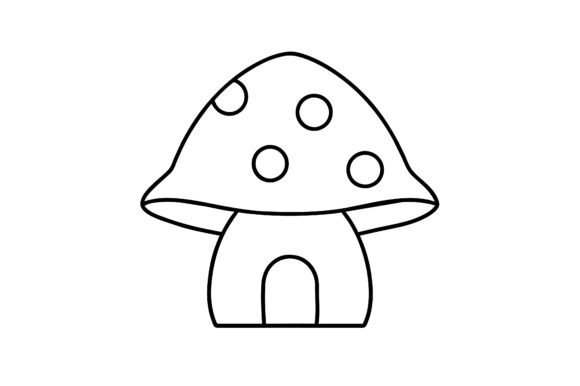
Minimalist design continues to hold steady appeal across creative projects, from branding and editorial layouts to home decor prints and social media graphics. A vector illustration of a minimalist mushroom often appears deceptively simple: a clean outline, a restrained palette, and a single subject. Yet that simplicity can be surprisingly versatile. Before you invest time in downloading, unzipping, and integrating such a file into your work, it helps to understand what this digital package actually offers, how it compares with other design formats, and when it fits your project best.
What Defines a Vector Illustration of a Minimalist Mushroom
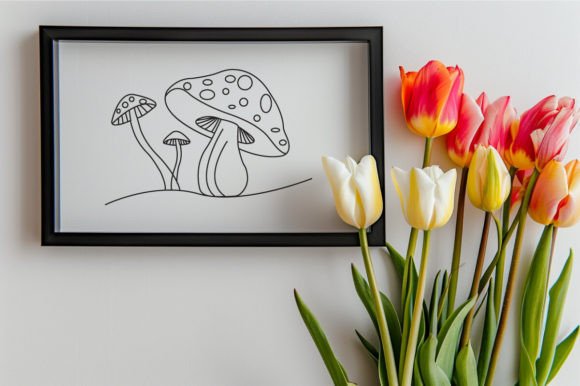
At its core, a vector illustration of a minimalist mushroom is a digital graphic file built from mathematical paths rather than pixels. This means the image remains crisp at any size—whether you scale it down to a small icon or blow it up to a poster. The "minimalist" descriptor signals that the design strips away unnecessary detail, focusing on the essential silhouette and form of a mushroom. You are likely to see clean curves, few or no shading gradients, and a limited color scheme, often monochrome or using just one or two muted tones.
What makes this particular offering distinct is the combination of file formats: it comes as both Vector EPS and SVG, along with HD printable files at a maximum size of 4000 px. The EPS file is widely compatible with professional design software such as Adobe Illustrator, CorelDRAW, and Affinity Designer. The SVG format, on the other hand, is ideal for web use, because it can be embedded directly into HTML and styled with CSS. The HD printable version gives you a high-resolution raster file ready for physical printing without needing to open a vector editor.
One nuance worth noting: this is a digital-only package. No physical item will accompany your download, and the files are delivered compressed, so you will need a computer to unzip them. That is standard for stock vector assets, but it is a practical point to remember if you were hoping for immediate use on a mobile device.
Vector Versus Raster: Why the Format Matters
To evaluate whether a vector illustration of a minimalist mushroom is right for you, it helps to compare vector formats with raster alternatives, such as JPEG or PNG photos of mushrooms. A raster image is made of pixels, so its resolution is fixed. If you enlarge a small raster mushroom, it will become blurry or pixelated. A vector file, by contrast, can be resized infinitely without any loss of quality. That makes vectors particularly useful for projects where the same graphic might appear on a business card and then later on a billboard.
However, vectors are not always the best choice. If your goal is to achieve a highly realistic, textured, or painterly look—for example, a watercolor mushroom with layered washes and paper grain—a vector outline will feel too clean and flat. In that case, a high-resolution raster image or a layered Photoshop file would serve you better. The minimalist vector mushroom shines when you want clarity, scalability, and a modern, uncluttered aesthetic.
Another tradeoff: working with vector files usually requires desktop software. While SVG files can be viewed in a browser, editing them typically demands a vector program. If you do not have access to such software, the EPS and SVG files may be less useful to you. The included HD printable version mitigates this somewhat, because it gives you a ready-to-use raster image that can be printed or opened in standard photo viewers.
Scalability Without Degradation
Because these files are vectors, you can scale the minimalist mushroom from a tiny favicon to a large wall art print without ever worrying about resolution limits. The 4000 px maximum size for the printable file already covers most standard poster dimensions, but the EPS and SVG give you unlimited potential beyond that.
Flexibility in Editing
The EPS and SVG formats allow you to change colors, adjust line weights, rotate the shape, or combine the mushroom with other elements. If your project requires a specific brand color or a different orientation, you have full control. That level of customization is far more limited with a ready-made raster image.
Minimalist Design Fits Many Contexts
A simple mushroom outline does not compete for attention. It works well as a subtle ornamental motif, a logo element, a small accent in a layout, or a standalone art print for a calm, nature-inspired space. The minimalism gives it staying power: it is less likely to look dated compared with highly stylized illustrations featuring trends like neon gradients or heavy textures.
Limitations and Practical Considerations
No single asset is universally perfect, and this vector illustration of a minimalist mushroom has its constraints. The most obvious is the narrow subject scope. You get one design: a minimalist mushroom. If you need a whole set of forest elements—acorns, leaves, ferns, trees—this standalone piece may not provide enough variety. In that case, you would either need to purchase multiple individual files or look for a themed collection.
Another limitation is the digital-only, zip-file delivery. After purchase, you must download the zip file, unzip it on a computer, and then transfer the individual files to wherever you intend to use them. This adds a small step compared with instantly usable files that are already uncompressed. It is a standard process for vector assets, but if you prefer immediate drag-and-drop use, be prepared for a brief extra step.
Additionally, the minimalist style inherently lacks detail. If your project calls for an ornate, botanically accurate mushroom with gills, stem texture, and natural shading, this outline will not satisfy that need. It is a stylized representation, not a scientific illustration.
When This Vector Illustration Is the Right Choice
You may find that a vector illustration of a minimalist mushroom works well in several scenarios:
- Branding and logos – A clean mushroom silhouette can function as a memorable, scalable logo for businesses related to nature, organic food, foraging, wellness, or gardening.
- Print-on-demand products – T-shirts, tote bags, mugs, and posters often benefit from simple, high-contrast designs that read clearly at a distance.
- Digital publishing – E-books, blog posts, newsletters, and social media graphics sometimes need small decorative elements that do not distract from text.
- Home decor – Minimalist art prints are popular for modern interiors. A single mushroom outline in a simple frame can complement a neutral or Scandinavian-style room.
- Educational materials – Worksheets, flashcards, or infographics for kids or students often use clear line art that is easy to reproduce.
When You Might Prefer an Alternative
In other situations, this asset may not be the best fit:
- Highly realistic or textured projects – If you need a photographic or painted mushroom, look for high-resolution raster imagery or brush-based digital paintings.
- Varied composition needs – If you are designing a full forest scene with multiple elements, a single mushroom graphic will feel sparse. You may be better served by a bundled illustration set.
- No vector software access – Users who rely entirely on mobile apps or basic photo editors may find vector files cumbersome. The HD printable gives you a workaround, but you lose the editability that vectors provide.
- Budget for multiple assets – If you need several distinct graphics, buying individual files can add up. Some designers prefer subscription-based stock sites that offer unlimited downloads for a flat monthly fee.
Practical Examples to Guide Your Decision
Imagine you are designing a brand identity for a small organic mushroom farm. You need a logo, a label for packaging, and a simple icon for the website footer. A vector illustration of a minimalist mushroom could serve all three purposes. You can take the EPS file, adjust the color to match the farm’s palette, scale it down for the icon, and keep it larger for the label. The same file works across print and digital without rework.
Now consider a different scenario: you are creating a children’s picture book about woodland creatures and need detailed, whimsical mushrooms on every page. A single minimalist outline will feel repetitive and lack the richness needed for that context. In that case, you would be better off with a custom illustration or a diverse collection of nature art.
Another example involves web development. If you are building a nature blog and want a simple mushroom icon to use inline with text, the SVG format is ideal. You can insert it directly into your HTML, change its color with CSS, and control its size responsively. No image editing software required after the initial asset purchase.
Evaluating the Investment
This package offers a single subject in multiple formats. When you compare it with other digital design resources, the main differentiators are format flexibility (EPS, SVG, and HD raster) and the minimalist aesthetic. If you value scalability, editability, and a clean style, the tradeoff of receiving only one subject may be acceptable. If you need variety, volume, or higher visual complexity, you would likely turn to a broader collection or a different type of asset altogether.
One decision factor that often goes unstated: your comfort level with vector editing tools. If you already use Adobe Illustrator or another vector program, the EPS file is a natural fit. If you have never opened a vector editor, the learning curve can be a barrier. However, the included SVG and HD printable options give you entry points that require less specialized software.
Also consider that minimalist mushroom vector art is a niche trend within the larger stock illustration market. It is not a core necessity for most designers, but for those working on nature-themed projects with a modern, reduced aesthetic, it can be a highly targeted solution that saves time compared with creating the graphic from scratch.
Making an Informed Choice
Before you download, ask yourself a few questions:
- Does my project need a single mushroom graphic, or am I expecting a set of related elements?
- Do I have access to software that can open and edit EPS or SVG files?
- Is the minimalist style aligned with my brand or aesthetic direction, or would a more detailed or realistic image serve better?
- Do I plan to use this graphic across multiple sizes and media, such as both web and print?
- Am I comfortable with a digital-only purchase that requires I unzip the files on a computer?
Answering these will help you determine whether a vector illustration of a minimalist mushroom is a smart addition to your design toolkit or an asset that does not quite match your needs. The value lies not just in the crisp outline and clean aesthetic, but in how well it fits into your specific workflow and creative vision.
Minimalist vector graphics continue to be a practical choice for designers who want versatility without visual clutter. By understanding what this package includes, where it excels, and where it falls short, you can decide with confidence whether to make it part of your next project.