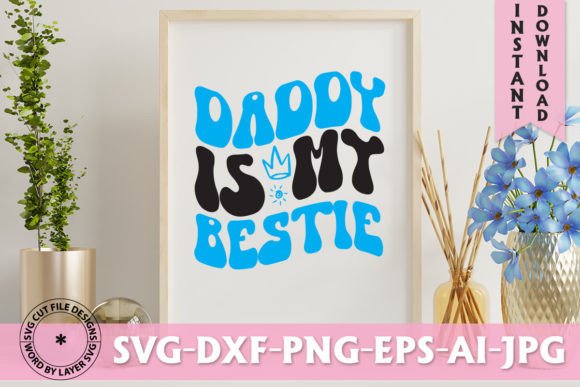
The Rise of Emotional Nostalgia: Understanding Daddy is My Bestie Retro Design and Its Place in Modern Creative Strategy
In a digital landscape saturated with sleek minimalism and hyper-polished interfaces, a counter-movement has quietly taken hold. It is warm, unapologetically sentimental, and rooted in the visual language of decades past. Known in creative circles as Daddy is My Bestie Retro Design, this aesthetic is more than a passing nod to vintage style. It is a deliberate, emotionally intelligent approach to design that resonates deeply with audiences seeking authenticity, comfort, and human connection in an increasingly automated world. For professionals across marketing, branding, product development, and content creation, understanding this movement is not merely a matter of trend-spotting—it is a strategic imperative.
What Exactly Is Daddy is My Bestie Retro Design?
At its core, Daddy is My Bestie Retro Design is a design philosophy that marries retro visual elements—think muted earth tones, rounded serifs, grainy textures, and analog-inspired layouts—with a relational, emotionally warm tone. The phrase itself evokes a sense of trusted companionship, familiarity, and unconditional support, qualities that this design style seeks to embody visually. It draws from the visual vernacular of the 1970s, 1980s, and early 1990s, but it is not mere pastiche. Rather, it recontextualizes those elements to speak to contemporary needs: the desire for simplicity, the craving for genuine human warmth, and the search for brands that feel like friends rather than faceless entities.
The design language typically includes:
- Warm, desaturated color palettes reminiscent of vintage photography and printed ephemera.
- Imperfect textures such as paper grain, halftone dots, and subtle scan lines that evoke tactility.
- Hand-drawn or hand-lettered typography that feels personal and unpolished.
- Nod to analog media like photo albums, cassette tapes, and printed letters.
- Compositional simplicity that prioritizes clarity and emotional resonance over complexity.
What distinguishes Daddy is My Bestie Retro Design from other retro revivals is its explicit emotional orientation. The aesthetic is not just about looking backward; it is about invoking the feeling of a trusted relationship—the ease, the safety, the joy of being with someone who knows you well. In a professional context, this translates to design that lowers defenses, builds trust, and encourages engagement.
The Broader Context: Why This Design Language Matters Now
To appreciate the relevance of Daddy is My Bestie Retro Design, one must consider the landscape in which it thrives. Over the past decade, digital experiences have become increasingly optimized, automated, and impersonal. Algorithms curate our feeds, chatbots handle our inquiries, and interfaces grow more uniform in pursuit of usability standards. While efficiency has its virtues, a growing body of consumer behavior research indicates that users are craving the opposite: friction that feels human, imperfection that feels real, and design that communicates empathy rather than efficiency.
This shift aligns with broader cultural movements. The anti-perfectionism trend, evident in everything from TikTok's raw, unpolished video style to the resurgence of zine culture, reflects a collective fatigue with the airbrushed, the sterile, and the corporate. People are drawn to brands that acknowledge vulnerability, celebrate imperfection, and communicate with the warmth of a trusted friend. Daddy is My Bestie Retro Design answers this call directly by embedding emotional cues into the visual fabric of a brand or product.
Consider the rise of indie brands and small-batch product lines that embraced this aesthetic well before it entered mainstream consciousness. A handcrafted ceramics brand using sepia-toned product photography and handwritten packaging evokes the same emotional response as a vintage family photo: it feels personal, cherished, and authentic. Larger enterprises have taken notice. Major companies in lifestyle, food, and technology are now incorporating retro design elements not as a gimmick, but as a strategic tool for differentiation and emotional connection.
Why People Are Paying Attention: The Psychology of Trust and Nostalgia
The attention that Daddy is My Bestie Retro Design receives is not accidental. Nostalgia marketing has long been understood as a powerful driver of consumer behavior, but the current wave goes deeper. Research in cognitive psychology suggests that nostalgic cues can reduce stress, increase social connectedness, and enhance a sense of meaning. In a time of rapid change—technological, economic, and social—the brain gravitates toward familiar, comforting stimuli. Retro design acts as a visual anchor, signaling safety and continuity.
Yet, Daddy is My Bestie Retro Design does not rely solely on nostalgia. The emotional component of the "bestie" relationship—trust, reciprocity, joy—adds a layer of relevance that pure vintage styling cannot achieve. When a brand adopts this design language, it is implicitly communicating: "We are on your side. We understand you. You can relax here." This is particularly effective in industries where trust is paramount, such as healthcare, financial services, education, and wellness. A financial planning app that uses warm, retro-inspired visuals and friendly, conversational copy feels less intimidating than one with a cold, corporate interface. The design lowers the emotional barrier to entry.
Moreover, in the creator economy, where freelancers, solo entrepreneurs, and small teams compete for attention against larger players, this aesthetic levels the playing field. A retro-inspired, emotionally warm brand identity can convey authenticity and personality that a polished, generic corporate identity cannot. It signals that the creator is human, approachable, and invested in the relationship rather than the transaction.
Changing Needs, Preferences, and Workflows
The relevance of Daddy is My Bestie Retro Design is also a response to shifting workflows and expectations. In an era of remote work, digital nomadism, and asynchronous collaboration, the line between professional and personal has blurred. Professionals are not only seeking tools and brands that work efficiently—they are seeking those that feel good to interact with. The emotional quality of design directly impacts user satisfaction, retention, and brand loyalty.
For marketers and content creators, the implications are clear. A campaign built around Daddy is My Bestie Retro Design will often outperform a conventional campaign in engagement metrics because it triggers an emotional response that purely informational content cannot. Social media platforms, especially Instagram and Pinterest, have seen a surge in accounts dedicated to retro-inspired aesthetics with a relational twist. These accounts are not just showcasing design; they are building communities around shared feelings of nostalgia, comfort, and belonging.
Practical examples abound. A small-batch coffee roaster may use product packaging featuring vintage botanical illustrations, handwritten tasting notes, and a warm, sepia-toned palette. The effect is immediate: the customer feels as though they have received a gift from a knowledgeable friend, not a commodity. A freelance graphic designer might build a portfolio website using grainy textures, retro typography, and a conversational tone that begins with "Hey there, thanks for stopping by." The visitor feels welcomed, not sold to. These are not arbitrary design choices; they are strategic decisions grounded in an understanding of how emotional design builds trust and drives action.
The workflow implications are equally important. Adopting this design language often requires a shift in creative process. Rather than starting with wireframes and usability guidelines, designers and content strategists begin with emotional goals: How do we want the user to feel? What relationship are we building? This human-centered approach aligns with broader movements in design thinking and user experience, but it adds an explicit emotional dimension that is sometimes overlooked in favor of purely functional metrics.
Connecting the Topic to Larger Developments
Daddy is My Bestie Retro Design does not exist in a vacuum. It intersects with several larger developments that professionals should understand.
First, the rise of anti-productivity culture. A growing number of creators and knowledge workers are rejecting the culture of constant optimization in favor of slower, more meaningful work. This ethos extends to the tools and brands they choose. Design that feels warm, imperfect, and relational aligns with a cultural shift toward intentionality and balance.
Second, the maturation of the creator economy. As more professionals move from traditional employment into freelance and entrepreneurial roles, the need for authentic personal branding intensifies. Audiences can spot inauthenticity from a distance. Daddy is My Bestie Retro Design offers a visual vocabulary that signals genuine connection rather than corporate polish.
Third, the growing importance of mental health and emotional well-being. Consumers are increasingly making decisions based on how products and brands make them feel. Design that evokes safety, warmth, and trust is not merely pleasing—it is psychologically supportive. Brands that adopt this language are positioning themselves as allies in well-being, which is a powerful market differentiator.
Fourth, the democratization of design tools. With platforms like Canva, Figma, and Adobe Express making vintage-style templates widely accessible, even small teams can execute a cohesive Daddy is My Bestie Retro Design strategy without a dedicated design department. This lowers the barrier to entry and accelerates adoption across industries.
Finally, the shift toward relationship-based marketing. In a world where third-party cookies are phasing out and algorithmic reach is volatile, brands are investing in direct, relational channels: email newsletters, community forums, and personalized content. The visual identity of these channels matters immensely. A newsletter that uses retro, warm design elements feels like a letter from a friend rather than a broadcast message. It gets opened. It gets read. It gets shared.
Practical Observations for Professionals
For those looking to integrate Daddy is My Bestie Retro Design into their work, several practical observations are worth noting.
Context is critical. This aesthetic works best when it aligns with the brand's core values and audience expectations. A law firm or industrial software provider might find the style jarring, while a lifestyle brand, creative agency, or wellness platform will find it natural. The key is to use the design language authentically rather than as an overlay.
Balance nostalgia with modernity. The most successful implementations of this style do not recreate the past verbatim; they reinterpret it. Use retro textures and colors, but maintain contemporary usability standards. Ensure that typography remains legible, navigation remains intuitive, and performance does not suffer. The goal is emotional resonance, not period accuracy.
Invest in copy and voice. The visual elements of Daddy is My Bestie Retro Design are only half the equation. The tone of the writing must match: warm, conversational, personal. Use first-person pronouns, share anecdotes, and speak to the reader as a trusted companion. The design and the copy must work in concert to create the emotional experience.
Test and iterate. While the aesthetic is powerful, its effectiveness varies across audiences. A/B testing landing pages, email campaigns, and product pages with retro versus modern designs can reveal surprising insights about audience preferences. The goal is not to adopt the style wholesale but to use it strategically where it drives the greatest impact.
Looking Ahead: The Staying Power of Emotional Design
Is Daddy is My Bestie Retro Design a trend or a lasting shift? The evidence suggests the latter. As digital experiences continue to proliferate, the craving for genuine human connection will only intensify. Design that prioritizes emotional warmth, relational cues, and nostalgic comfort is not a reaction against progress—it is a maturation of it. It acknowledges that technology is not an end in itself, but a medium for human interaction.
For professionals, creators, and entrepreneurs, the lesson is clear: design that builds trust, evokes warmth, and feels like a conversation with a trusted friend is not a luxury—it is a competitive advantage. Whether you are launching a product, building a brand, or growing an audience, the principles of Daddy is My Bestie Retro Design offer a proven pathway to deeper engagement and lasting loyalty. The style may evolve, but the need it serves—the need to feel understood, safe, and valued—is timeless.
Embrace it not as a nostalgic escape, but as a forward-looking strategy for creating meaning in a crowded digital world. Your audience will feel the difference. And they will thank you for it.